

Is It Lazy, or Is It Burnout? Understanding the Hidden Crisis in Thai Students
Is It Lazy, or Is It Burnout? Understanding the Hidden Crisis in Thai Students
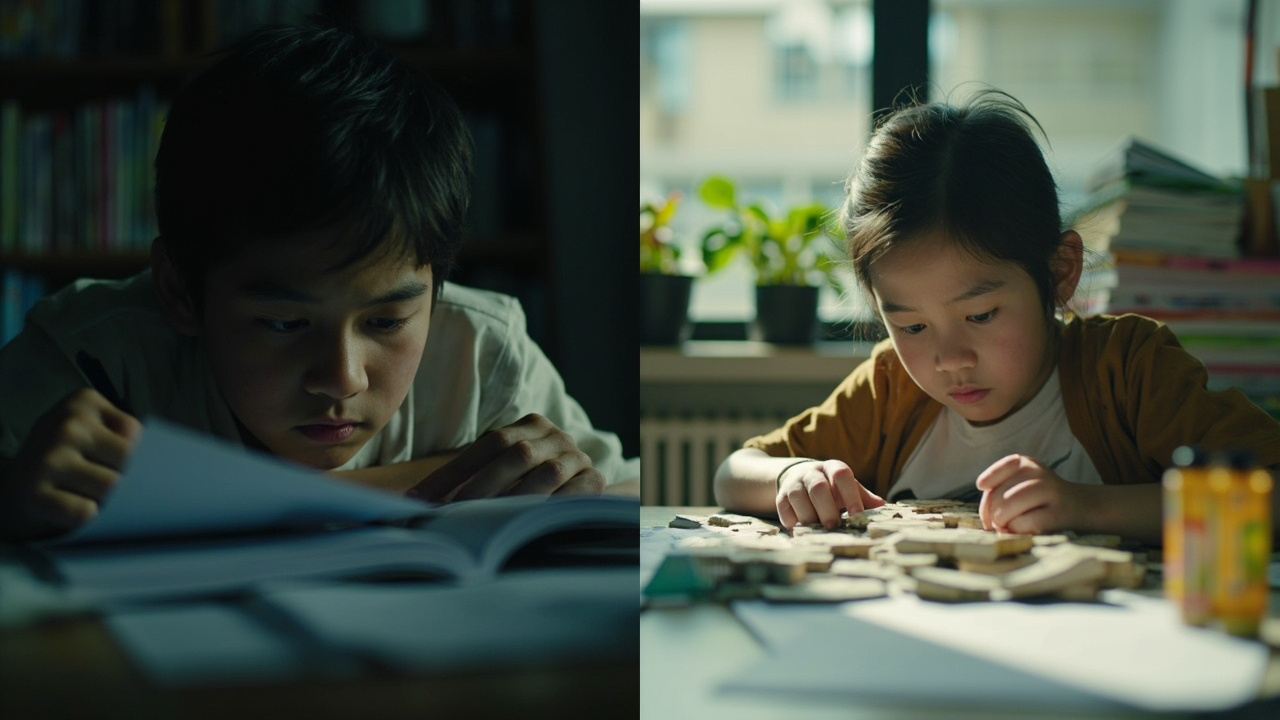
Your child used to finish their math homework without complaint. Now, they stare at the same page for an hour. You ask them to read and they groan. You suggest a practice quiz and suddenly they need water, need to stretch, need to do anything else except sit down and study.
Your first thought might be: Are they just being lazy?
Before you reach that conclusion, consider this — what if your child isn't lazy at all? What if their brain is running on empty?
In Thailand, a growing number of students are experiencing a phenomenon educators and psychologists are calling "ภาวะสมองล้า" or Brain Burnout — a state of mental exhaustion where the brain simply cannot engage anymore, no matter how hard the student tries.
Understanding the difference between laziness and burnout is one of the most important things a parent can learn this year.
What Brain Burnout Actually Looks Like
Brain burnout doesn't always announce itself with dramatic symptoms. Often, it hides behind behaviors that look like plain unwillingness:
- A student who can concentrate for hours on video games but falls apart after 20 minutes of homework
- A child who says "I don't care" when actually their stress levels are through the roof
- A teenager who isn't failing but isn't trying either — coasting in a fog of mental fatigue
- Young learners who lose joy in subjects they once loved
If this sounds familiar, your child isn't choosing to disengage. Their cognitive resources are depleted. They are not lazy. They are exhausted in a way that rest alone cannot fix.
Why Thai Students Are Especially Vulnerable
Thailand's academic culture is intense. From a young age, many students juggle school, tutoring centers, supplemental worksheets, and exam preparation. The pressure to perform starts earlier and builds higher than most countries.
Research on student well-being consistently shows that Thai students report high levels of academic stress, particularly in mathematics and science — subjects that carry enormous weight in university entrance exams and carry deep cultural expectations of mastery.
This constant high-pressure environment creates a perfect storm for brain burnout:
- Chronic cognitive overload — the brain never gets time to consolidate and rest
- Emotional exhaustion — anxiety about performance becomes constant background noise
- Loss of intrinsic motivation — learning becomes something you survive, not something you enjoy
- Physical fatigue — sleep deprivation from late-night study sessions compounds everything
When burnout sets in, it doesn't just affect schoolwork. It affects a child's confidence, their relationship with learning, and their mental health.
The Critical Difference: Laziness vs. Burnout
| Laziness | Brain Burnout |
|---|---|
| Lack of motivation without underlying cause | Cognitive and emotional exhaustion |
| Selective — avoids effort but enjoys other activities | Pervasive — nothing feels engaging or achievable |
| Child can push through if sufficiently motivated | Child cannot push through, even with encouragement |
| Responds to consequences and incentives | Responds to relief, support, and system change |
| A behavioral choice | A neurological and emotional state |
The key question to ask yourself is: "Does my child want to do well, but can't get started — or can they genuinely not bring themselves to care about anything?"
If the answer is "they want to but can't get started," you are likely looking at burnout.
7 Practical Tips for Parents to Help Reset Your Child's Brain
1. Name the Experience for Them
Children often feel confused and guilty about their own exhaustion. Help them understand what brain burnout is. Say something like: "I notice you've been feeling really tired with school. That makes sense — your brain has been working so hard. It's not weakness, it's overload." Naming it removes shame and opens the door to healing.
2. Audit the Cognitive Load
Take a hard, honest look at everything on your child's plate. How many tutoring sessions per week? How many practice tests? How many hours of homework? More is not always better. Often, the cure for brain burnout is strategic reduction, not addition.
3. Build in Mandatory Cognitive Rest
The brain consolidates learning during rest — not during more study. Ensure your child has genuine downtime: walks, play, music, or simply doing nothing. This is not wasted time. It is the time that makes learning possible.
4. Prioritize Sleep Above All Else
Sleep deprivation is the hidden accelerator of brain burnout. A tired brain cannot memorize, reason, or recover. Protect your child's sleep schedule as a non-negotiable priority, even during exam season.
5. Shift the Goal from Performance to Process
When children feel burned out, the pressure of "getting it right" becomes paralyzing. Reframe success around effort and curiosity: "What did you explore today?" instead of "How did you score?" This reduces anxiety and rebuilds intrinsic motivation.
6. Use Adaptive, AI-Powered Learning Tools
Traditional one-size-fits-all practice often worsens burnout. If a child is struggling, repetitive drilling of the same content intensifies exhaustion without building understanding. Look for learning platforms that adapt to your child's actual level — starting where they are, moving at their pace, and keeping engagement high through personalization.
This is where Math Advantage can make a meaningful difference. Our AI-powered adaptive learning platform is designed with your child's cognitive wellbeing in mind. It identifies exactly where your student is struggling, creates a personalized learning path that doesn't overwhelm, and builds confidence through steady, appropriate progress. Learning feels achievable again — not impossible.
7. Watch for the Signs and Act Early
Brain burnout is easier to reverse in its early stages. If you notice changes in sleep, mood, appetite, or motivation — don't wait. The sooner you intervene with support and system change, the faster your child can recover.
A Message of Hope
If you've been watching your bright, capable child pull away from learning — please hear this: You are not failing as a parent. Your child is not failing as a student. You are facing a systems problem that requires a thoughtful response.
Brain burnout is real, it is common, and it is recoverable. With the right understanding, the right environment, and the right tools, your child can rebuild their relationship with learning — not just survive it.
The goal isn't just to get through the next exam. The goal is to raise a learner who is resilient, curious, and capable of thinking clearly under pressure. That future starts with recognizing what your child actually needs.
They don't need more pressure. They need a smarter path forward.
Want to talk to our team?
We'd love to answer your questions and help you find the right solution for your child.
Contact UsYou might also like

Math Phobia: The Intergenerational Curse — How Parental Anxiety About Math Is Passed to Children, and How to Break It
How parental anxiety about math is passed to children, and how to break it.
The TCAS Burnout: How Early Logical Thinking Prevents the Grade 12 Admissions Breakdown
How early logical thinking prevents the Grade 12 admissions breakdown.

Math Isn't About Numbers, It's About Logic
Why the belief 'I'm not good at math' is a myth — and how shifting to a logical thinking mindset unlocks mathematical confidence for Thai students.