The Distance Learning Gap: Why Satellite TV Isn't Enough, and the Critical Need for Personalized Feedback
The Distance Learning Gap — Why Satellite TV Isn't Enough, and the Critical Need for Personalized Feedback
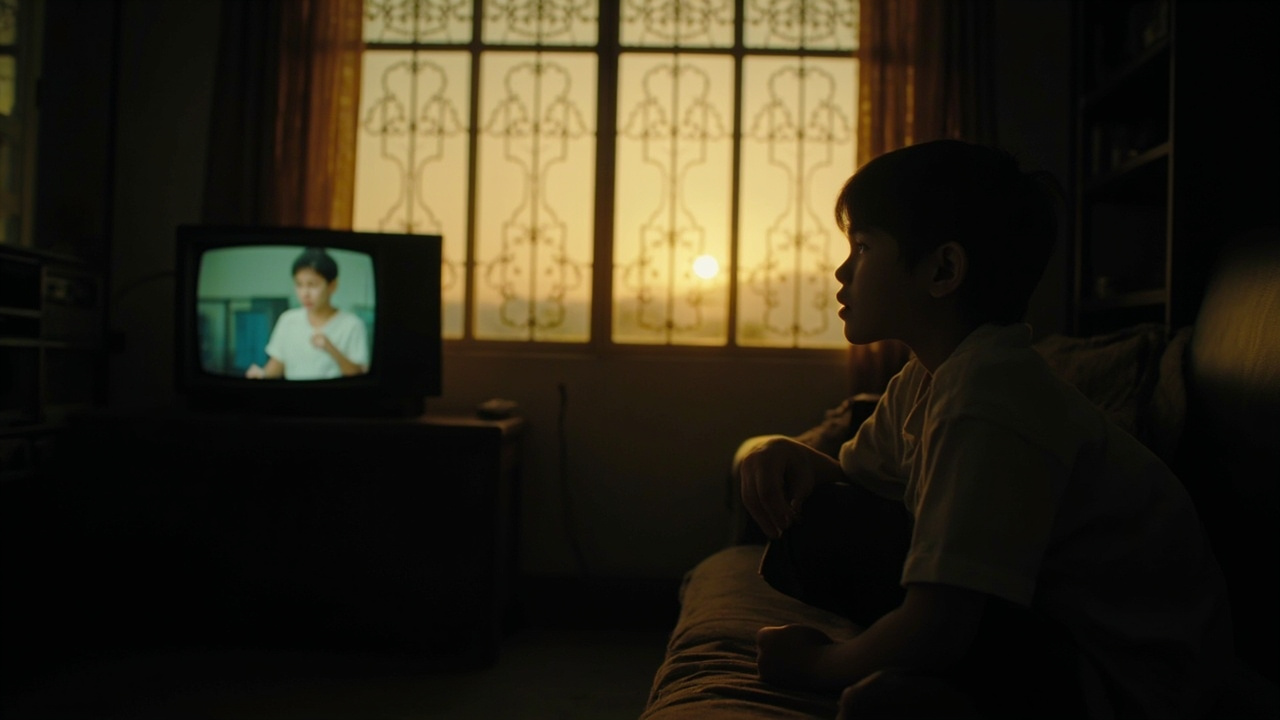
It's 7:45 on a Tuesday morning in Chiang Mai. A fourth-grade student named Nong sits cross-legged on the living room floor, eyes fixed on a small television screen as a teacher on a satellite broadcast begins today's math lesson. She is confused by a fraction problem at the 12-minute mark. She raises her hand — but there is no one there to see it. She rewinds the clip, watches it again, and still does not understand. By afternoon, she has moved on, carrying that gap in comprehension forward into the next lesson. No one noticed. No one followed up.
This scene played out in countless Thai homes during the COVID-19 school closures, and it remains a quiet reality for families still relying on one-directional broadcast models for distance learning. Satellite television lessons and pre-recorded video modules delivered at scale served an important purpose: they kept education flowing when nothing else could. But they also exposed a fundamental flaw that decades of learning science have documented — passive content delivery cannot replace interactive, personalized feedback. And for Thai students who are already navigating a competitive academic landscape, that gap is not a minor inconvenience. It is a serious obstacle.
What Satellite TV and Pre-Recorded Lessons Get Wrong
Broadcast distance learning platforms were designed to reach millions of students simultaneously. That is an impressive engineering feat, but it comes with a built-in limitation: the communication flows in one direction. A teacher delivers a lesson. A student receives it. There is no pause for confusion, no adaptation for pace, no check for understanding, and no immediate response to a wrong answer.
Research consistently demonstrates why this matters. A landmark meta-analysis published in Review of Educational Research found that students who received personalized feedback on their work improved test scores by an average of 12 to 15 percentile points, compared to students who received no feedback or generic feedback. The study defined "personalized feedback" as responses tailored to a specific student's reasoning, errors, and learning style — not generic comments like "good job" or "try again." Satellite broadcasts cannot provide this. Pre-recorded videos, no matter how well-produced, cannot provide this. And this is precisely where the distance learning gap widens.
In the Thai context, this gap is particularly concerning. A report from the Office of the National Economics and Social Development Council (NESDC) estimated that learning loss during the pandemic years left many students six to twelve months behind their expected curriculum benchmarks. Satellite lessons helped fill the airtime, but they did not fill the learning gaps.
The Difference Between Watching and Learning
There is a critical distinction that educators call the "learning versus exposure" problem. Exposure means a student has encountered information. Learning means a student has processed, practiced, and received guidance that helps them internalize and apply that information. Watching a television broadcast creates exposure. Receiving a personalized explanation after making a mistake creates learning.
Consider a practical example from a real Thai classroom scenario. A student watches a broadcast lesson on the Vietnamese/Thai War, then completes a comprehension worksheet. She answers three out of five questions incorrectly. Under a traditional classroom model, her teacher would review her responses, identify the specific misunderstandings, and re-explain the material in a way that connects to her existing knowledge. Under the satellite model, the lesson simply moves forward. She files the worksheet, the confusion persists, and the next lesson builds on a fragile foundation.
Over an academic year of this pattern, the compounding effect is significant. A 2022 study by the Thailand Development Research Institute found that students relying solely on broadcast-based learning showed lower average retention rates on standardized assessments compared to peers who had access to interactive tutoring, even when both groups covered the same content. The students who learned with personalized support retained significantly more.
Why Personalized Feedback Is Not a Luxury — It Is a Necessity
Thai parents often跟我说 (tell me) that they can see the difference in their children's confidence when someone takes the time to explain a concept in a way that finally makes sense. That moment — when a child's face shifts from confusion to understanding — is not just emotionally satisfying. It is the engine of real academic progress.
Personalized feedback accomplishes three things that broadcast learning cannot:
- It identifies misconceptions in real time. When a student misunderstands a concept, that misunderstanding must be corrected before it becomes entrenched. A tutor or interactive platform catches it. A broadcast does not.
- It adapts to the learner's pace. Some students need more time with multiplication tables. Others grasp them quickly but struggle with word problems. Personalized attention allows instruction to flex to meet each child's needs.
- It builds motivation and self-efficacy. When students receive specific, constructive responses to their work, they feel seen and supported. They are more likely to engage, ask questions, and take intellectual risks — behaviors that passive consumption actively discourages.
These three factors are not theoretical. They are measurable drivers of academic outcomes, and they represent the gap that broadcast distance learning simply cannot close.
The Opportunity Schools and Families Cannot Afford to Miss
For school administrators, the challenge is institutional. Many schools in Thailand are operating with tight budgets, large class sizes, and teachers who are already stretched thin managing classroom instruction. Adding personalized check-ins for every student is not always feasible within the existing system. Yet the data is clear: without personalized feedback, the distance learning gap does not close on its own.
For parents, the challenge is personal. You want your child to thrive. You want them to build real understanding, not just memorize enough to pass a test. You want them to feel confident and capable, not confused and left behind. And you know, perhaps instinctively, that watching a television screen is not the same as learning.
The question is not whether personalized education matters. The question is how to access it — affordably, reliably, and in a way that fits your family's life.
How Tutor Advantage Closes the Gap
Tutor Advantage was designed with one guiding principle: every student deserves personalized feedback, not just the ones whose families can afford private tutors at premium rates.
Tutor Advantage connects Thai students with qualified tutors who provide real-time, interactive sessions tailored to each child's specific academic needs. Unlike satellite broadcasts or pre-recorded video libraries, Tutor Advantage tutors observe your child's reasoning, identify gaps as they form, and respond with explanations designed for how your child learns best. Sessions are structured to encourage active participation, questions, and dialogue — the exact elements that transform passive exposure into lasting learning.
Whether your child is catching up after pandemic-era learning loss, preparing for national exams, or simply building stronger foundational skills in Thai language, mathematics, or science, Tutor Advantage provides the consistent, personalized support that broadcast learning models cannot.
Visit /products/tutor-advantage today to explore flexible tutoring plans designed for Thai families and schools. Every session is a step toward closing the distance learning gap — not with a screen, but with a teacher who truly sees your child.
Want to talk to our team?
We'd love to answer your questions and help you find the right solution for your child.
Contact UsYou might also like
EP Programs: Is the ROI Worth It?
Research-backed analysis of English Program schools in Thailand: Are they worth the investment?

The 'Dek-D' Generation: How Self-Directed Learners Are Bypassing Traditional School Limitations
How self-directed learners are bypassing traditional school limitations.

The EF English Index Reality Check: Why Thailand Still Ranks Low Globally and How Your Child Can Beat the Average
Why Thailand still ranks low globally and how your child can beat the average.