Fake News in the Family Chat: Why Critical Reading Is the Ultimate Defense Against Digital Misinformation
Fake News in the Family Chat: Why Critical Reading Is the Ultimate Defense Against Digital Misinformation
The 7 AM Message That Started It All
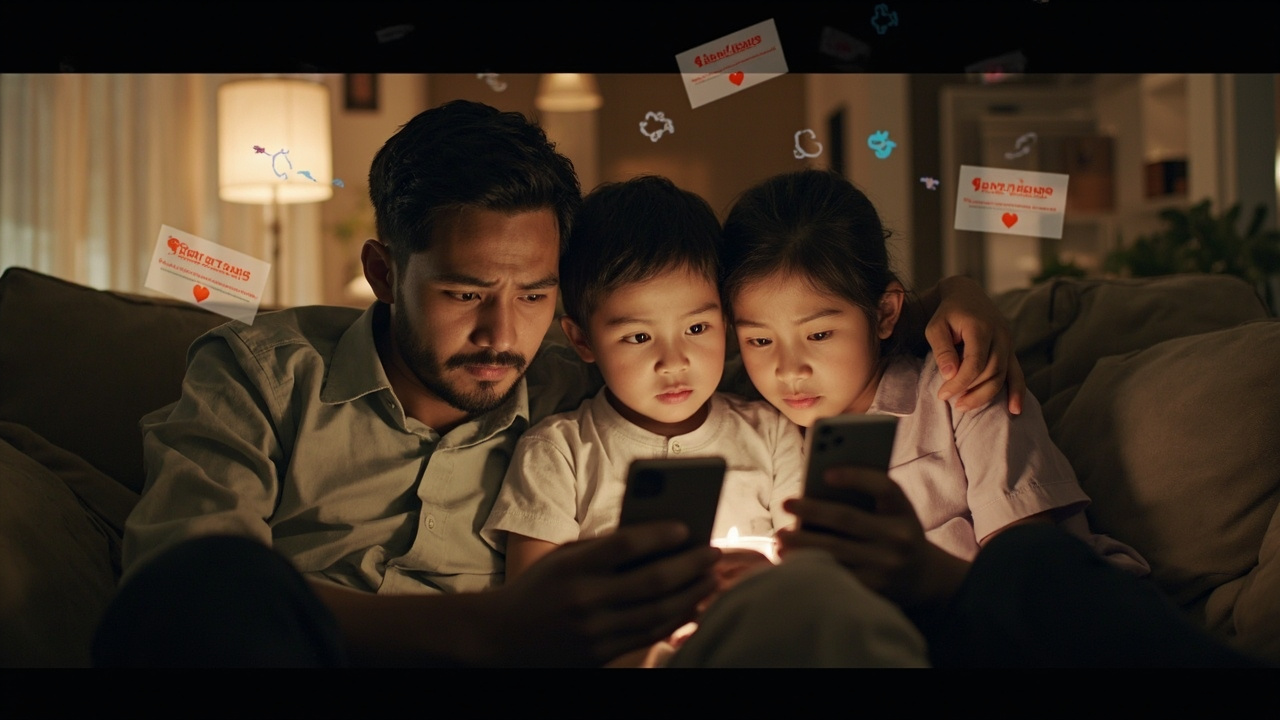
It begins the same way in thousands of Thai households every morning. A notification pings in the family LINE group. Your aunt has forwarded a lengthy message about a miraculous health cure, a pending government policy, or a warning about a popular food product. The message claims to be from a "doctor friend" or a "relative who works at the ministry." Within minutes, three other family members have replied with prayer hands and thank-you stickers.
By the time you've finished your morning coffee, the false information has been endorsed by people you love and trust. And if you try to correct it? You're met with silence, defensiveness, or the classic response: "Better safe than sorry."
This isn't a hypothetical scenario. For millions of Thai families, misinformation has become as routine as breakfast. And the most unsettling part? Our children are watching us navigate this digital chaos without the tools to protect themselves.
Thailand's Misinformation Epidemic
The numbers tell a sobering story. Thailand ranks among the world's most active social media users, with the average person spending over three hours daily on platforms like Facebook, LINE, and TikTok. This connectivity has tremendous benefits, but it has also created fertile ground for false information to spread faster than truth.
During election periods, health crises, and natural disasters, the volume of misinformation spikes dramatically. False health claims about miracle cures circulate widely. Fabricated political statements are shared as fact. Doctored images and AI-generated content blur the line between reality and fiction so effectively that even tech-savvy adults struggle to distinguish them.
Why are Thais particularly vulnerable? Several cultural factors amplify the problem:
High trust in forwarded messages. In Thai culture, information shared by family members or authority figures carries implicit credibility. A message forwarded by your mother feels more trustworthy than a random internet article, even when both originate from the same unreliable source.
Social pressure to acknowledge and share. When a respected relative shares information in a family group, there is social pressure to respond positively. Questioning the information can feel disrespectful, so false claims go unchallenged.
Limited media literacy education. Most Thai adults received no formal training in evaluating sources, identifying bias, or recognizing manipulation techniques. They are navigating the digital information landscape with instincts developed for face-to-face communication.
Why Children Are the Most Vulnerable
If adults struggle with misinformation, children face an even greater challenge. Today's young people are digital natives who have never known a world without smartphones, social media, and instant information. They consume content constantly—but nobody has taught them how to evaluate what they're consuming.
Consider what a typical Thai teenager encounters in a single day: news articles shared by friends, influencer opinions presented as facts, comment-section debates, TikTok explanations of complex issues, and memes that simplify serious topics into catchy slogans. Each piece of content carries an implicit claim to credibility, and most young people lack the analytical framework to assess those claims.
The consequences extend beyond simple embarrassment from sharing false information. Children who cannot evaluate sources are vulnerable to:
- Health misinformation that leads to harmful decisions about diet, medication, or medical treatment
- Financial scams disguised as investment opportunities or prize notifications
- Radicalization through emotionally manipulative content that exploits their developing worldviews
- Academic consequences when they cannot distinguish credible research from propaganda
- Social division when they adopt polarized positions based on distorted information
The problem isn't that children are gullible. It's that we've thrown them into an information ocean without teaching them to swim.
Critical Reading: The Skill That Changes Everything
Here's the hopeful truth: critical reading is not an innate talent that some children have and others lack. It is a teachable skill that can be developed systematically from an early age. And it is the single most effective defense against digital misinformation.
Critical reading goes far beyond basic literacy. A child who can read critically doesn't just understand the words on the page—they interrogate them. They ask questions that most readers never consider:
- Who wrote this, and what might they want me to believe?
- What evidence supports these claims, and is that evidence credible?
- What information might be missing from this story?
- How does the language try to make me feel, and is that feeling manipulated?
- Where else can I verify what I'm reading?
These skills don't just protect children from fake news. They transform them from passive consumers of information into active, discerning thinkers. A child who reads critically will question a misleading advertisement, recognize bias in a news article, and spot logical fallacies in an argument. These capabilities serve them in every aspect of life, from academic performance to professional success to civic engagement.
How Reading Advantage Builds Critical Readers
At Reading Advantage, we believe that critical reading should be taught as early as possible, before children develop the habit of passive consumption. Our programs are designed to build these capabilities progressively:
For early readers (ages 6-8), we focus on foundational comprehension and basic source awareness. Children learn to distinguish between fact and opinion, identify who is telling a story, and recognize when information comes from a reliable source versus an unreliable one. Simple exercises—like comparing two versions of the same event—build the habit of questioning what they read.
For developing readers (ages 9-12), we introduce more sophisticated analytical skills. Students learn to identify author's purpose, recognize emotional manipulation in language, and evaluate evidence quality. They practice comparing multiple sources on the same topic and identifying where those sources agree and disagree.
For advanced readers (ages 13-16), the focus shifts to real-world application. Students analyze news articles, social media posts, and advertising copy using the same frameworks that professional fact-checkers employ. They learn about cognitive biases, logical fallacies, and the techniques that misinformation campaigns use to exploit human psychology.
Throughout every level, our approach emphasizes active engagement over passive reception. Students don't just read—they respond, debate, revise their thinking, and defend their conclusions with evidence. This process builds not only critical reading skills but also the confidence to stand by well-reasoned beliefs, even when those beliefs contradict what everyone else in the family chat is sharing.
A Different Kind of Protection
You can't monitor every piece of content your child encounters online. You can't fact-check every message they receive. You can't shield them from the information chaos that defines our digital age.
But you can give them something better than protection: you can give them judgment.
Critical reading is the judgment that allows a child to scroll past manipulation, question sensational claims, and seek out reliable information. It is the foundation of digital citizenship and the prerequisite for informed participation in society. It is, quite simply, the most important skill a child can develop in the twenty-first century.
The fake news in your family chat isn't going away. But your child's vulnerability to it can.
Ready to build your child's critical reading defenses? Explore Reading Advantage and discover how our programs develop the analytical skills that protect young minds from misinformation—today and for the rest of their lives.
Want to learn more?
Explore how Reading Advantage can help your child.
Learn more about Reading AdvantageWant to talk to our team?
We'd love to answer your questions and help you find the right solution for your child.
Contact UsYou might also like

EP Programs: Is the ROI Worth It?
Research-backed analysis of English Program schools in Thailand: Are they worth the investment?
The Distance Learning Gap: Why Satellite TV Isn't Enough, and the Critical Need for Personalized Feedback
Why satellite TV isn't enough, and the critical need for personalized feedback.

The 'Dek-D' Generation: How Self-Directed Learners Are Bypassing Traditional School Limitations
How self-directed learners are bypassing traditional school limitations.