

From User to Creator
From User to Creator
The Screen Time Reality in Thai Homes
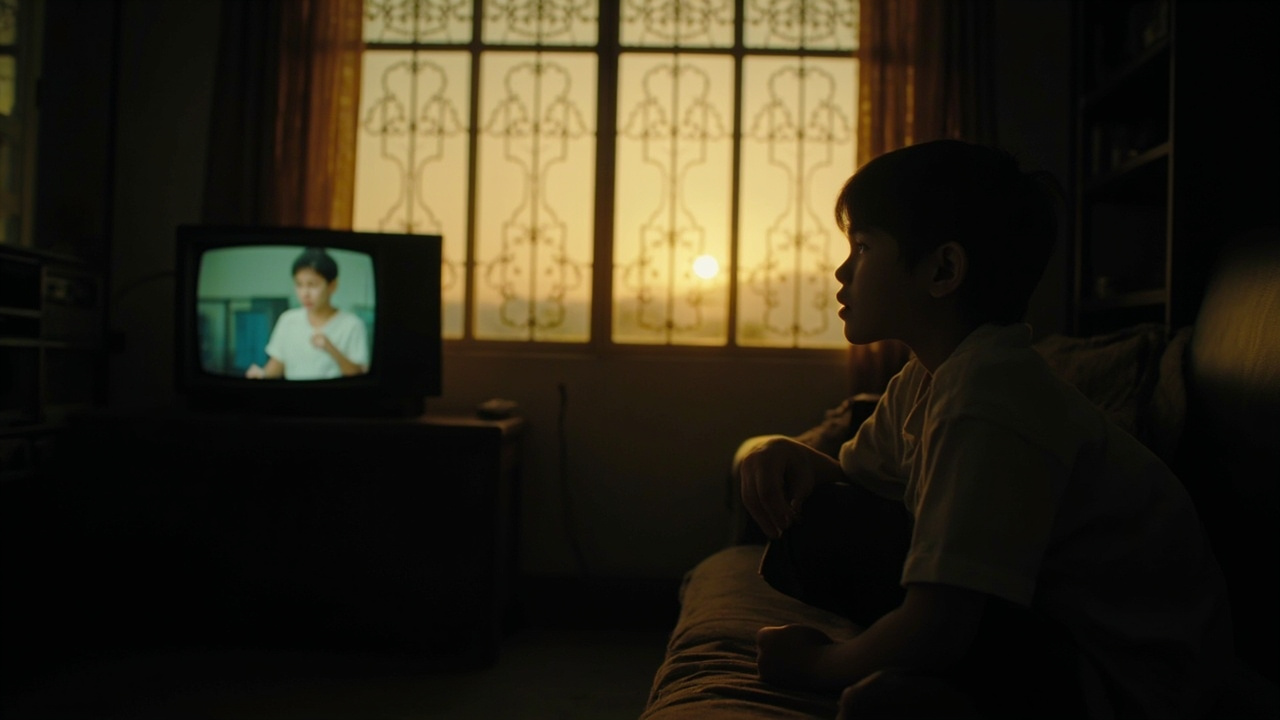
Walk into almost any Thai household with school-age children, and you'll likely find the same scene: kids scrolling through TikTok, binge-watching YouTube, gaming with friends, or chatting on social media. Thai children aged 6-12 spend an average of three to four hours online daily—often more on weekends. They navigate apps and platforms with impressive fluency. They know how to find content, engage with influencers, and build their own digital personas.
But here's the critical question: do they understand what makes these technologies work?
Most children in Thailand today are exceptional consumers of technology. They are passive recipients of content, algorithms, and experiences designed by others. They can use a smartphone before they can read a clock. Yet when asked how a video gets to their screen, why certain posts appear in their feed, or how the games they love are actually built, the answers often reveal a surprising lack of understanding.
This gap between usage and comprehension represents one of the most pressing educational challenges of our time.
The Difference Between Using and Understanding
There's a fundamental difference between knowing how to operate something and understanding the principles behind it. You can drive a car without knowing how an engine works. You can use a smartphone without any knowledge of programming or data systems. You can order food delivery daily without understanding the logistics algorithms that make it possible.
This distinction matters enormously in today's workforce and tomorrow's economy. Thailand 4.0 and the broader digital transformation sweeping through Southeast Asia demand a generation that can do more than press buttons. They need critical thinkers who can question, analyze, and ultimately create the technologies that shape society.
Being a digital consumer is not a skill—it's a default setting. Every child with a connected device becomes a consumer automatically. But being a digital creator? That requires education, guidance, and intentional skill development.
Why Digital Literacy Alone Isn't Enough
Schools increasingly teach digital literacy: internet safety, responsible online behavior, privacy awareness, and media evaluation. These are essential foundations. We want children who don't fall for scams, who understand the permanence of digital footprints, and who can distinguish credible information from misinformation.
But digital literacy addresses only half the equation. It prepares students to be safer, smarter users. It doesn't prepare them to be architects of the digital future.
Consider what's missing when children only learn to consume:
They don't learn how algorithms work—or how to work with them rather than for them. They don't gain problem-solving skills through building, testing, and iterating. They miss opportunities to experience the deep satisfaction of creating something from nothing. And they enter the job market equipped only to operate tools built by others, rather than to innovate and lead.
The Creation Imperative for Thai Students
Thailand faces a particular urgency in this area. While the country has made significant investments in digital infrastructure, the human capital pipeline has not kept pace. Thai students rank behind regional peers in programming, engineering, and applied technology skills. This isn't a reflection of capability—Thai students are as bright and motivated as any in the world—but of educational priorities and opportunities.
The jobs of 2030 will be overwhelmingly technical and creative. Roles in software development, data science, robotics, and digital design are growing at double-digit rates across Southeast Asia. Yet the supply of qualified candidates remains inadequate. Companies report that they can find people who can use software, but far fewer who can build it.
This is where the creation imperative becomes clear. Students who learn to create technology don't just gain a career advantage—they gain a mindset advantage. They see problems as opportunities. They view constraints as design challenges. They understand that the digital world is not fixed and finished, but constantly evolving and improvable.
Building Creators with STEM Advantage
STEM Advantage was designed specifically to address this gap between consumption and creation. Our program takes students beyond passive learning and into active building.
Through project-based curricula in coding, robotics, and digital design, students don't just learn about technology—they use technology to solve problems. They design, prototype, fail, refine, and ultimately produce tangible results. They move from understanding how apps work to building their own applications. From playing games to designing them.
What sets STEM Advantage apart is our focus on age-appropriate creation. Younger students begin with visual programming and interactive projects that build foundational thinking skills. Older students progress to more complex challenges involving app development, data analysis, and engineering concepts. Throughout, the emphasis remains on active creation rather than passive reception.
Our instructors guide students through the creative process while fostering the technical skills that make creation possible. The result is learners who don't just consume Thailand's digital future—they build it.
Ready to Make the Shift?
Every hour your child spends creating is an investment in their future capabilities. The apps they'll build, the problems they'll solve, and the innovations they'll contribute all begin with the skills they develop today.
Technology will continue to advance. The tools will change. The platforms will evolve. But the ability to understand, question, and ultimately create—these are timeless skills that serve a lifetime.
Your child already knows how to watch videos and play games. Let's give them the tools to understand why those experiences work—and the confidence to build something new.
Take the first step toward transforming your child from a consumer into a creator.
Explore STEM Advantage today and discover how we help Thai students become architects of the digital future.
Want to talk to our team?
We'd love to answer your questions and help you find the right solution for your child.
Contact UsYou might also like

EP Programs: Is the ROI Worth It?
Research-backed analysis of English Program schools in Thailand: Are they worth the investment?
The Distance Learning Gap: Why Satellite TV Isn't Enough, and the Critical Need for Personalized Feedback
Why satellite TV isn't enough, and the critical need for personalized feedback.

The 'Dek-D' Generation: How Self-Directed Learners Are Bypassing Traditional School Limitations
How self-directed learners are bypassing traditional school limitations.