
The Paperwork Trap: Why Thai Teachers Are Burning Out From Admin Tasks
The Paperwork Trap: Why Thai Teachers Are Burning Out From Admin Tasks
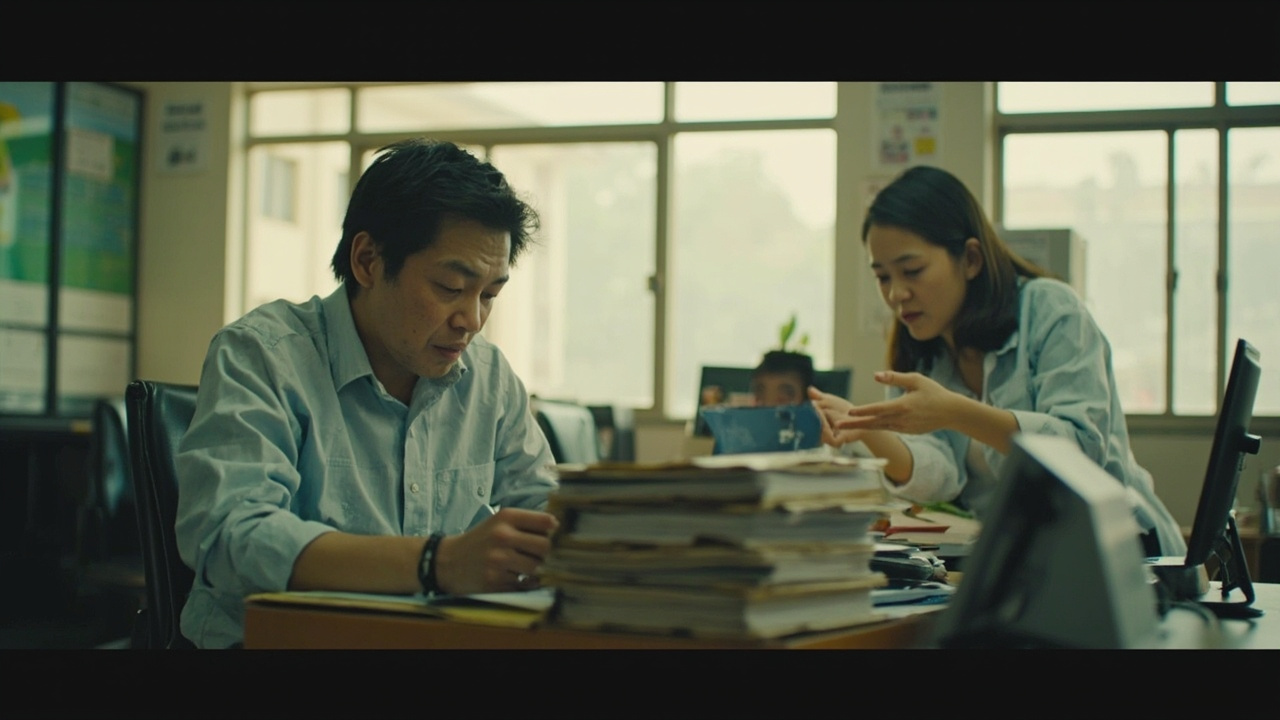
A teacher enters the profession because they want to teach. They imagine guiding students through difficult ideas, watching confidence grow, building relationships, and creating the classroom moments that parents remember years later. But in many Thai schools, the daily reality looks very different. The teacher arrives before morning assembly, checks attendance, prepares lesson materials, updates parent messages, fills out internal reports, organizes assessment records, joins a meeting, adjusts a timetable, prepares evidence for an upcoming inspection, and only then tries to enter the classroom with enough energy to teach well.
This is the paperwork trap. It is not one form, one report, or one deadline. It is the slow accumulation of administrative tasks that pull teachers away from the core work of education. Each task may seem reasonable in isolation. Together, they create a system where teachers spend too much of their professional life proving that teaching happened instead of improving the teaching itself.
For school leaders, this problem is easy to underestimate because the work is scattered across many small moments. Five minutes after class. Ten minutes during lunch. An hour after school. A Saturday morning spent preparing files. But when these moments are added together, they become one of the largest hidden costs in Thai education.
The Real Cost of Administrative Overload
Administrative work is not inherently bad. Schools need records. Parents deserve communication. Regulators require evidence. Directors need visibility into what is happening across classrooms. The problem begins when the operational system is weak and teachers become the default solution for every gap.
When schedules are not centrally managed, teachers become schedulers. When curriculum tracking is not standardized, teachers become data clerks. When parent communication lacks a clear process, teachers become full-time customer service staff. When reports are built manually, teachers become spreadsheet operators. None of these tasks are the highest use of a trained educator's time.
The damage appears in several ways.
First, lesson quality suffers. A teacher who spends the evening completing administrative files has less time to refine tomorrow's lesson, prepare differentiated activities, or review student work carefully. The classroom may still function, but it loses depth. Lessons become more routine because the teacher has no time to design something better.
Second, teacher energy declines. Burnout is not only caused by too many hours. It is caused by the feeling that the work never ends and that the most meaningful part of the job is constantly interrupted. Many teachers can handle a demanding classroom if they feel the work matters. What wears them down is the sense that administration expands to fill every available space.
Third, accountability becomes performative. When documentation grows faster than support systems, staff begin to optimize for compliance rather than learning. Files look complete, but the information inside may not lead to better decisions. The school appears organized on paper while teachers and students feel the pressure underneath.
Why Thai Schools Are Especially Vulnerable
Thai private schools often operate in a difficult middle ground. Parents expect premium service. Government requirements still apply. Competition is rising. Enrollment pressure is real. At the same time, many schools do not have the operational infrastructure of a large international school group. They may have strong teachers and committed leaders, but limited systems for workflow design, data reporting, curriculum mapping, and staff support.
This creates a dangerous pattern: every new expectation becomes another teacher task.
A new parent communication initiative? Teachers handle it. A new assessment report? Teachers build it. A new enrichment program? Teachers coordinate it. A new quality assurance requirement? Teachers collect the evidence. Eventually, even excellent teachers begin to feel that their role has become fragmented.
The solution is not to tell teachers to work faster. It is to redesign the operating model so teaching time is protected.
What Managed Services Actually Solves
Reading Advantage Managed Services exists for this exact problem. It is not a cosmetic consulting package and it is not a generic outsourcing model. It is an operational support system for schools that want to improve quality without overloading their staff.
The first step is visibility. We help schools map where teacher time is actually going: lesson planning, parent communication, reporting, scheduling, curriculum coordination, assessment preparation, and compliance evidence. Most schools discover that the issue is not one large task. It is a network of small, repeated tasks with no clear owner or process.
The second step is workflow redesign. Some tasks should remain with teachers because they require professional judgment. Others should move to administrative support, shared templates, centralized scheduling, or repeatable operating procedures. The goal is not to remove responsibility. The goal is to put responsibility in the right place.
The third step is implementation support. A better workflow only matters if people can use it consistently. Managed Services helps schools create practical routines: reporting cycles, curriculum calendars, parent communication standards, classroom observation support, and leadership dashboards that make the school easier to manage.
Most importantly, this work is done with respect for teachers. The message is not "teachers are failing." The message is "teachers are being asked to carry too much operational weight." When the system improves, teachers can do what they were hired to do.
Returning Teachers to Teaching
A healthy school does not measure professionalism by how late teachers stay to complete paperwork. It measures professionalism by the quality of learning students experience each day.
Imagine a school where teachers still document student progress, but the process is simple and useful. Where parent updates follow a clear rhythm instead of interrupting every evening. Where lesson planning is supported by a shared curriculum map. Where school leaders can see patterns without asking teachers to rebuild the same report again and again. Where meetings are shorter because the data is already organized. Where teachers leave school tired from teaching, not exhausted from administration.
That is not a fantasy. It is an operations problem, and operations problems can be solved.
For Thai schools competing in a demanding market, reducing teacher administrative overload is not only an act of kindness. It is a strategic decision. Schools that protect teacher time will deliver better lessons, retain stronger staff, communicate more clearly with parents, and build a culture where quality is sustainable.
The paperwork trap will not disappear by asking teachers to be more dedicated. They are already dedicated. It disappears when school leaders build systems worthy of that dedication.
If your school is ready to reduce administrative overload and return teachers to teaching, learn more about Reading Advantage Managed Services. We help schools build the operational backbone that great teaching deserves.
你可能还喜欢

EP Programs: Is the ROI Worth It?
Research-backed analysis of English Program schools in Thailand: Are they worth the investment?

The Distance Learning Gap: Why Satellite TV Isn't Enough, and the Critical Need for Personalized Feedback
Why satellite TV isn't enough, and the critical need for personalized feedback.

The 'Dek-D' Generation: How Self-Directed Learners Are Bypassing Traditional School Limitations
How self-directed learners are bypassing traditional school limitations.