
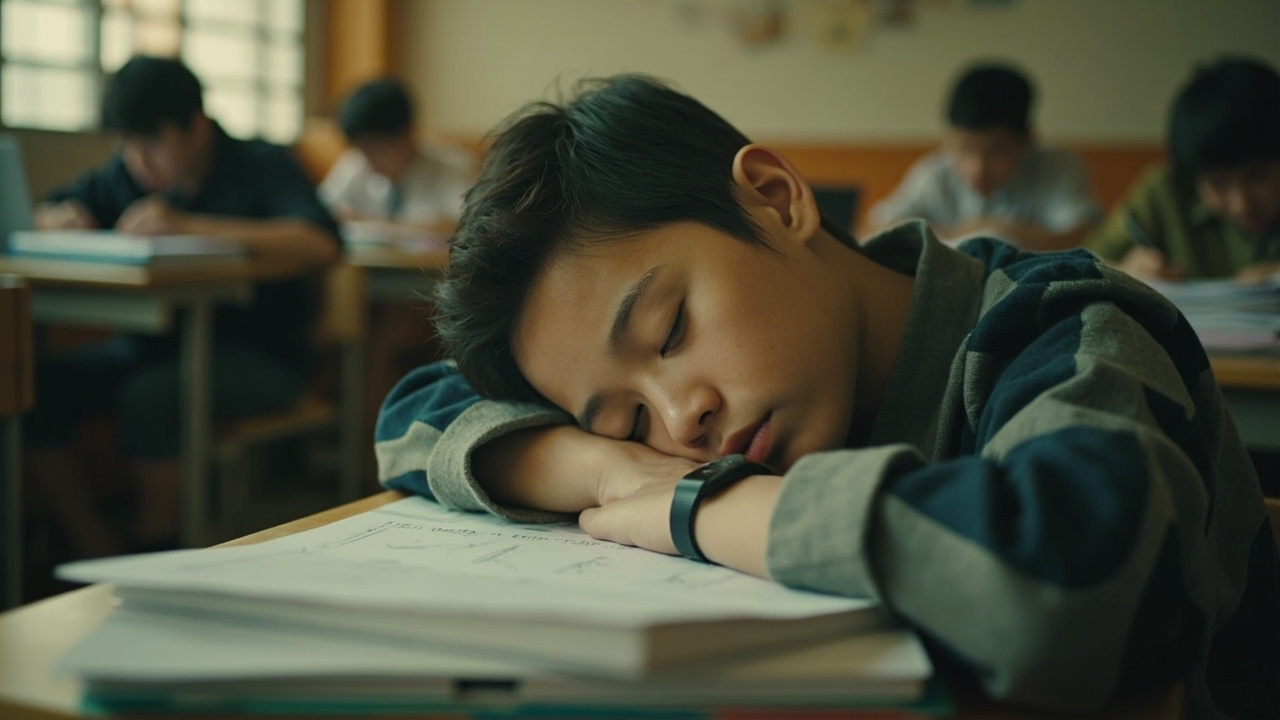
The Tutoring Epidemic: Is 12 Hours of Extra Tutoring Helping or Harming Your Child's Brain?
The Tutoring Epidemic: Is 12 Hours of Extra Tutoring Helping or Harming Your Child's Brain?
Walk through any Bangkok neighbourhood after school and you will see it: clusters of children clutching plastic bags of worksheets, drifting between tuition centres with tired eyes and heavy school bags. In Thailand, the number is staggering — some secondary students attend five, six, or even seven tutoring sessions per week, adding ten to fifteen extra hours of academic instruction on top of a full school day. Parents spend a significant portion of household income on these programmes, driven by genuine love and the fierce belief that more tutoring equals more success. But the science — and the real-world experience of exhausted children — tells a more complicated story.
The tutoring epidemic in Thailand is not simply a cultural habit. It is a pressure system built on fear, competition, and the deeply held assumption that hours spent = grades earned. And while the intent behind every tutoring session is admirable, the reality is that something is going very wrong for a growing number of our children.
The Hidden Costs: What 12 Hours a Week Takes From Your Child
When we talk about tutoring overload, we need to start with what is happening to children's bodies and minds — because the damage is real, measurable, and often invisible until it becomes a crisis.
Sleep deprivation is the first casualty. The average Thai student already wakes early for school. Add two or three evening tutoring sessions, homework, and the commute between centres, and bedtime creeps past 10 PM — sometimes later for secondary students preparing for entrance exams. Research consistently links insufficient sleep in adolescents to impaired memory consolidation, reduced emotional regulation, and declining academic performance. A child attending twelve hours of tutoring on six hours of sleep is not learning more. They are learning less while burning out.
Chronic stress and anxiety follow close behind. Thai children as young as ten years old are reporting symptoms of academic burnout: irritability, refusal to attend classes, psychosomatic complaints like headaches and stomachaches, and a growing sense that school and learning are punishment rather than opportunity. One tutoring session in a supportive environment can be helpful. Seven sessions in high-pressure environments, across different teachers with different expectations, creates a chaotic cognitive load that leaves children constantly on edge.
Physical health deteriorates too. Sedentary time increases dramatically when children go from school desk to tuition desk. Meals are eaten in transit. Outdoor play, family time, and unstructured rest — the activities that actually support healthy brain development — disappear entirely. Parents often do not connect the dots between tutoring overload and their child's frequent illness, weight gain, or complaints of constant fatigue. But the body keeps score.
The most heartbreaking part? Children rarely blame the tutoring. They blame themselves for not being smart enough, not trying hard enough. The guilt is theirs; the system that created the overload is invisible.
The Myth of More: Why Excess Tutoring Produces Diminishing Returns
Here is where the math gets uncomfortable for parents caught in the tutoring spiral.
Learning is not a linear function. A student who studies one hour with a great teacher will learn significantly more than a student who studies zero hours. But the second hour of study does not produce the same gains as the first — and by the fifth, sixth, or seventh hour of formal instruction in a single week, the marginal returns approach zero or turn negative. This is not opinion. It is established cognitive science known as the diminishing returns principle, and it applies to academic tutoring as much as it applies to any other form of skill training.
Why does this happen? Because learning requires consolidation time. After a student receives new information, their brain needs downtime — sleep, play, reflection, and loosely structured activities — to process and store that information in long-term memory. When every waking hour is scheduled with instruction and practice tests, the consolidation window closes. The result? Students recognize the material in the short term ("cramming effect") but cannot retain or apply it when it matters most: the actual exam, the next academic year, real problem-solving situations.
There is also a psychological ceiling. Motivation, curiosity, and openness to new ideas — the emotional conditions that make learning possible — erode under constant pressure. A student who arrives at a tutoring session already depleted, resentful, or anxious is not primed to absorb new information. They are in survival mode. They go through the motions. They score marginally higher on the next practice test and parents feel vindicated — until the exhaustion catches up, the grades plateau or fall, and everyone is left wondering what went wrong.
What Quality Tutoring Actually Looks Like
This is not an argument against tutoring. It is an argument against bad tutoring at scale. When tutoring is done right — when it is designed around how children actually learn — it remains one of the most powerful educational interventions available. The distinction comes down to methodology.
Effective tutoring is diagnostic, not generic. Before a single lesson plan is built, a skilled tutor assesses where a student truly stands: which foundational concepts are solid, which are shaky, and which gaps are creating downstream confusion. A student struggling with reading comprehension in English may actually have an underlying issue with vocabulary depth, working memory, or even foundational Thai literacy. Cookie-cutter tutoring programmes that move through a fixed curriculum regardless of the student's starting point do not fix problems — they cover them.
Effective tutoring teaches thinking, not just answering. The goal is not for a child to memorize the answer to question seventeen. The goal is for them to understand the reasoning process that generates correct answers across dozens of similar questions — and across subjects. When tutoring focuses on methodology — how to break down a problem, how to analyze a reading passage, how to build a logical argument — the learning transfers. The child becomes a stronger student, not just a better test-taker for one specific exam.
Effective tutoring respects the student's time and wellbeing. Sessions should be focused, intensive, and finite. A well-structured ninety-minute session with a skilled tutor who understands methodology can produce more measurable progress than three hours of a large-group tuition centre where students passively copy notes. And crucially, effective tutoring leaves time for the student to rest, play, and do the cognitive consolidation that makes learning stick.
Effective tutoring adapts and communicates. A great tutor tracks progress, identifies emerging gaps, adjusts instruction accordingly, and keeps parents genuinely informed — not with vague promises of "improvement" but with concrete evidence of developing skills.
This is the tutoring methodology that Tutor Advantage was built on: fewer hours, deeply targeted instruction, a focus on methodology over memorisation, and a commitment to each student's real learning needs rather than the volume of content covered.
A Better Path Forward for Thai Families
Your child's education deserves more than a race to the top of the hours logged. It deserves the right hours, spent in the right way, for the right reasons.
If your child is currently attending six or seven tutoring sessions a week and still not showing the improvement you hoped for, the problem is almost certainly not effort or intelligence. The problem is the system — too many hours, too many teachers, too much pressure, and not enough methodology-driven instruction that actually builds lasting skills.
Start with an honest assessment. How many tutoring hours is your child actually attending? How many of those hours are producing meaningful, measurable progress — not just a slightly higher practice test score? How are they sleeping, eating, and enjoying their childhood?
Reducing tutoring hours is not a compromise. When the hours you keep are the right ones, it is a strategic upgrade.
Tutor Advantage offers targeted, methodology-focused tutoring for students at international and private schools across Thailand. Our sessions are designed to produce real results in fewer hours — because we believe your child deserves to learn well and live well.
Contact us today to schedule your free academic assessment with Tutor Advantage and discover what quality tutoring actually looks like. Spaces are limited, and we work with students at schools throughout Bangkok and across Thailand. Give your child the advantage they deserve — not more of the same, but something genuinely different.
你可能还喜欢
EP Programs: Is the ROI Worth It?
Research-backed analysis of English Program schools in Thailand: Are they worth the investment?

The Distance Learning Gap: Why Satellite TV Isn't Enough, and the Critical Need for Personalized Feedback
Why satellite TV isn't enough, and the critical need for personalized feedback.

The 'Dek-D' Generation: How Self-Directed Learners Are Bypassing Traditional School Limitations
How self-directed learners are bypassing traditional school limitations.